Blog Archives
Been a Little Busy Lately
Because, short term, we need to win in November or descend into fascism. But this is not a political blog so I will leave it at that.
Instead, I’ll recommend some othe reading: Andrew Spring writes:
From the very first words to the very last verse, the writings of the Bible document the best and worst of human action and belief. It is a work of literature that can do tremendous harm—but also tremendous good.
This uncomfortable fact is usually lost on those of us who left the religion about Jesus—Christianity—in search of the religion of Jesus. (The former is the invention of rich men trying to control humanity, the latter is the radical and world-changing spirituality and ethical living preached by an ancient prophet.)
The bible is not one book – it’s a library. The Bible is a collection of writings, and the word comes from the Greek biblia, which means “the books,” plural. It’s sort of like saying The Library.
It would be like asking what your favorite Beatles song is and saying Abbey Road. Clearly you don’t know what you’re talking about, because Abbey Road is not one song, but a collection of songs—just as the Bible is not one writing but a collection of writings.
But unlike Abbey Road, each of the writings of the Bible have different authors. (I double checked: almost all the songs on Abbey Road were written by both Lennon and McCartney, except three that were written by George or Ringo.²) And each writing was done in a different location, with different audiences and—wait for it—different purposes.
Perhaps some Christians refuse to acknowledge this, because if the Bible is a collection of writings, that means somebody had to put them together.Looked at through this lens, the Bible becomes much more human—and much more prone to error.
Google Andrew Spring to read more. He can be controversial but that’s good, it makes you think.
There is also a substack post called “She’s So Scripture”
A New Golden Calf?
This blog is about the teachings of Jesus, but recent events bring an old testament passage, Exodus 32, to mind.
When the people saw that Moses was so long in coming down from the mountain, they gathered around Aaron and said, “Come, make us gods who will go before us. Aaron answered them, “Take off the gold earrings that your wives, your sons and your daughters are wearing, and bring them to me.” So all the people took off their earrings and brought them to Aaron. He took what they handed him and made it into an idol cast in the shape of a calf. Then they said, “These are your gods, Israel, who brought you up out of Egypt.”
Two gold statues of Donald Trump were unveiled and blessed by an evangelical pastor. One was a 22-foot gold-leafed colossus at Trump National Doral, draped in fabric like a Roman toga. The second at Mar-a-Lago, where Trump appeared in a suit.
When Aaron saw this, he built an altar in front of the calf and announced, “Tomorrow there will be a festival to the LORD.”
So the next day the people rose early and sacrificed burnt offerings and presented fellowship offerings. Afterward they sat down to eat and drink and got up to indulge in revelry. Then the LORD said to Moses, “Go down, because your people, whom you brought up out of Egypt, have become corrupt.
Have we, as a nation, become corrupt? Time will tell
Sin, Onan, & Other Mysteries
/Many years ago I was traveling on business, and at the end of the day, called home to my wife to tell her how my day went. I’d visited a company that made generators, called Onan.
There was a long pause. She finally asked, “Don’t they know what that means? The sin of Onanism?” This brought a smile to my face, as I had not considered this interpretation. I hope the Sin of Onanism is not really a sin, since it is so frequently done by men and women all over the world. 😉
This leads one to wonder, what actions could really be consider sinful? And why do people commit things usually thought of as sinful? Let’s start with the Ten Commandments, after all, and compare them with what Jesus said.
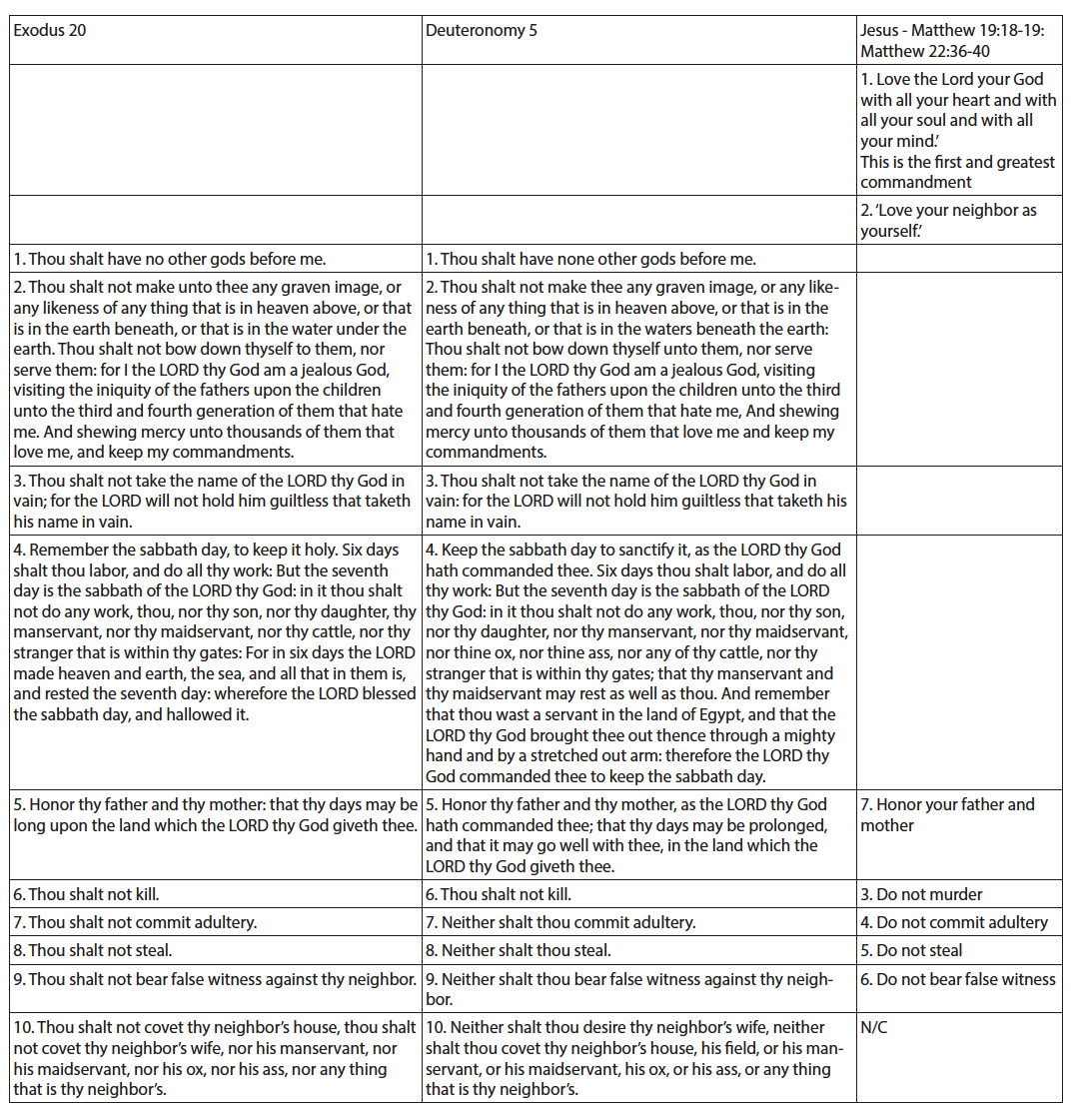
Jesus does not seem to care much about commandments 1 through 4, and 10. The logical computer-programmer person in me has always thought the first commandment in not monotheistic. It’ says you can’t have any gods ahead of the Lord, but doesn’t say you can’t have any secondary gods. One suspects this is more carelessness on the part of the scribes – it can’t be too easy carving stuff into stone.
But all in all it suggests that we can have all the paintings and statues of Jesus and God that we want. And we can keep Vince Lombardi as long as we remember he’s toward the back of the line.
When asked about the greatest commandment (Matthew 22:37–40), Jesus gives a powerful summary:
• Love God with all your heart, soul, and mind
• Love your neighbor as yourself
He says all the other commandments, which he listed in Matthew 19, hang on these two. In other words, every rule points away from cruelty and back to love and kindness.
Jesus goes on to criticize excessive legalisms: Jesus says in Mark 7:15, “Nothing outside a person can defile them by going into them. Rather, it is what comes out of a person that defiles them.” He then elaborates on the sorts of things that can come from within, out of a person’s heart, that evil thoughts come—sexual immorality, theft, murder, adultery, greed, malice, deceit, lewdness, envy, slander, arrogance and folly. All these evils come from inside and defile a person.”
Jesus does not list cruel words explicitly, but I suspect his reference to deceit and slander would apply to the cruel things we sometimes say.
Obedience isn’t about legalism—it’s about relationship with others. He teaches that the spirit of the law matters more than rigid rule-keeping. A simple way to understand it is that Jesus takes the commandments from:
• Arbitrary rules to follow to a life shaped by love
• External behavior to inner transformation
• Onerous obligation to a relationship with the world
Jesus doesn’t hand you a checklist—He gives you a mirror. The commandments are not just about what you do with your hands, but what lives in your heart. If you love God deeply, and love others genuinely, you won’t break the commandments—you’ll fulfill them. And in my experience, you will have a happier life each and every day – you will walk in the light, not the darkness.
But you should still wash your hands before eating, if possible.
Zacchaeus & Stephen Miller
Luke 19:2 says “Here was a man by the name of Zacchaeus; he was a chief tax collector, and he was rich.”
In those days, being a tax collector was sort of a franchise. You paid the Romans an up-front fee and then a percentage of your take. But you kept the balance. This was a path to riches, and to becoming the most hated man in your neck of the woods.
The Jewish community considered tax collectors so compromised, so ceremonially and morally unclean, that they were grouped in religious literature alongside prostitutes. They were barred from giving testimony in court. They could not hold religious office.
In the eyes of their own community, they had forfeited their place among the people of God. They were traitors, collaborators, and thieves, all three at once, and Zacchaeus was the most successful one in town.
His name, incidentally, means pure or innocent. The irony was not lost on any one hearing this from an Apostle.
It seems he was a short little man, with all the insecurities one often finds in shorter people.
Luke continues: Zaccheus was trying to see who Jesus was, and was unable because of the crowd, for he was small in stature. So he ran on ahead and climbed up into a sycamore tree in order to see him, for Jesus was about to pass through that way. When Jesus came to the place, he looked up and said to him, “Zaccheus, hurry and come down, for today I must stay at your house.”
Now in those days (and now), to have someone over for dinner suggests at least a certain level of honor. We rarely invite people we consider pond scum into our homes. Nor do we choose to dine with those we consider pond scum.
Jesus looked at the most hated man in Jericho and said publicly, in front of a crowd of people who had been waiting to see a miracle: I’m going to his house. Today.
The crowd’s reaction tells you everything. When they saw it, they all began to grumble, saying, “He has gone to be the guest of a man who is a sinner.”
Now, the word grumble in the Greek, διεγόγγυζον (diegongyzon), is the same word used in the Septuagint for Israel’s complaints in the wilderness. Luke’s audience, steeped in the old testament, would have caught the comparison immediately. They were as unhappy at Jesus’s behavior as the Israelis had been when lost in the desert. This is not a mild grumble – it’s a shock.
What happens next is even more of a shock. Zaccheus immediately says to Jesus that he will give half of my possessions to the poor. And if I’ve defrauded anyone I will pay back four times over.
Jesus said to him, “Today salvation has come to this house, because he, too, is a son of Abraham. For the Son of Man has come to seek and to save that which was lost.”
Jesus had not asked Zacchaeus to clean up his act first. He had not required a confession before extending the invitation. He walked up to the man and offered him relationship before Zacchaeus had done a single thing to earn it.
Half his possessions to the poor. Torah did not require this. There is no commandment that says give away fifty percent of everything you own. This was radical, voluntary, economy-altering generosity that would have fundamentally changed Zacchaeus’s financial position.
Four times as much for anyone he had cheated. This is where it gets really precise. Exodus 22:1 required fourfold restitution for the theft of livestock, animals that could reproduce and whose loss compounded over time.
It was the Torah’s highest restitution requirement, reserved for the most serious categories of theft. Zacchaeus was not meeting the legal minimum. He was voluntarily applying the maximum standard to his own case, treating every act of extortion as worthy of the most serious Torah consequence.
This is not a man making a general promise to do better. This is a man who knew the law, named the specific legal remedy, and applied it to himself without being asked. He was stating his own guilt and his own sentence in the same breath and doing it in front of a crowd that despised him.
The key point is that Jesus extended grace before repentance came. He offered relationship before Zacchaeus had done anything to deserve it. And that grace, that completely unearned, publicly scandalous, crowd-offending grace, is exactly what produced the repentance. Zacchaeus did not clean himself up and then get invited to dinner. He got invited to dinner and the invitation changed EVERYTHING.
The crowd thought the question was whether Zacchaeus was worthy of Jesus’s company. Jesus was not interested in that question. His question was whether Jesus was lost and whether he could find him. And the answer was yes and yes. He was the one amongst the ninety-nine.
The Son of Man came to seek and save the lost. Not the almost-lost. Not the lost who had already started making their way back. The ones still up in trees, watching from a distance, fairly certain they were too far gone to be the ones He was actually looking for. This is a pretty high bar for the rest of us.
I’m not sure I could extend grace, friendship, or much of anything else to Stephen Miller. He’s the one really pulling the strings at the White House, then man who wrote much of Project 2025, the man who is ripping babies from their families, the man who is terrified there might be more Americans with brown skin. Perhaps Jesus will use his grace for Stephen, and the cabal of others in the White House who are treating Americans far worse than Zacchaeus treated his neighbors. ‘Tis a thing devoutly to be wished for, but I am not my breath holding.
Where Your Treasure Is
This is the fiftieth anniversary of the movie about Watergate, “All the President’s Men”. You remember, the one where a source on background kept meeting one of the reporters in a parking garage. He was nick-named “Deep Throat”, and his most useful tip was “Follow the Money.”
Apparently Jesus saw the previews, because he says: “For where your treasure is, there your heart will be also.”
This simple sentence cuts straight to the center of our lives.
We spend so much time chasing things—money, success, recognition, comfort. None of these are evil in themselves. But Jesus is warning us: whatever you value most will shape your heart.
In this author’s experience, it is excellent advice in general Want to know why some corporation has what appears to be a silly rule? Follow the money. It’s not always bad to follow the money, at least in business. It explains a lot about business behavior.
But if your treasure is wealth, your heart will live in fear of losing it.
Or if your treasure is status, your heart will constantly compare yourself to others, and like as not come up short.
If your treasure is comfort, your heart will avoid sacrifice.
On the other hand,if your treasure is God—if your treasure is love and truth, then your heart becomes steady, generous, and full of peace.
Jesus isn’t just telling us to feel differently. He’s telling us to invest differently.
Think about it this way:
• What do you think about the most?
• What do you protect the most?
• What do you pursue when no one is watching?
That is your treasure.
And here’s the hope in Jesus’ teaching:
You can move your treasure, and when you do, your heart will follow.
When you give instead of hoard, your heart grows generous.
When you serve instead of seek attention, your heart grows humble.
When you trust God instead of clinging to control, your heart grows peaceful.
Jesus is inviting us to a better kind of wealth—one that cannot rust, fade, or be taken away.
So today, take a moment and ask yourself, Where is my treasure?
Because wherever it is… that’s where your heart is living.
Who Is My Neighbor?
A man once asked Jesus, “Who is my neighbor?”
It’s a question we still ask today—sometimes out loud, sometimes in how we live.
Jesus answered not with a definition, but with a story.
A man from Galilee’s was beaten, robbed, and left for dead on a road. He cried out for help, but two respected, religious men saw him and passed by. A squad of soldiers came by, and vowed to hunt down the robbers and smite them with the Lord’d Vengeance.
Then a man from Samaria came by. The victim was saddened, because Samaritans and Galileans don’t always get along. But the Samaritan stopped and bandaged the man’s wounds, then helped him to his feet. Together they managed to limp into the nearest village.
Jesus asked his questioner, Which one was the neighbor?
The answer is clear: the one who showed mercy.
The lesson is just as clear—and just as challenging.
Being a neighbor isn’t about proximity. It’s not about who is like us, agrees with us, or belongs to our group. It’s about how we respond when we see someone in need.
We live in a world full of reasons to pass by:
- “I’m too busy.”
- “Someone else will help.”
- “They don’t deserve it.”
But Jesus calls us to something higher.
He calls us to see people.
To stop even when it’s inconvenient. Maybe even especially then.
To help even when there might be some risk or danger.
To love without conditions.
Because real love isn’t theoretical—it’s practical. It shows up. It gets its hands dirty. It crosses boundaries.
So today, ask yourself:
Who is lying on the road in your life?
Who have you been walking past?
They may not be near by. They may be in Ukraine, or Sudan. Or they may be sleeping under a bridge just down the street from you.
And then hear Jesus’ final words in that story:
“Go and do likewise.” So, like, do it already!
The United States is NOT a Specifically-Christian Nation
Nor was it intended to be. Read on….
Roger Williams, a Puritan, believed the “garden of the church” should be separated “from the wilderness of the world” by means of a wall of separation. “Wilderness for them was a place of danger where evil lurked. So when Roger Williams talked about separating the garden of the church from the wilderness of the world, he was eager to maintain the integrity of the faith lest it be corrupted by too close an association with the state.”
In 1625 Charles I had little tolerance for those who wanted to purge the Church of England of all Roman Catholic elements, or, as they became known, Puritans. Charles empowered church authorities to persecute those who deviated from church policy. The year 1629 became one of decision for many Puritans. John Winthrop was given an opportunity to lead an organization called the Massachusetts Bay Company.
In early April 1630 Winthrop led a party bound for Salem, Massachusetts, followed by Roger and Mary Williams eight months later. Along with 20 other passengers on the vessel Lyon, they landed at Nantasket on February 5, 1631. Winthrop was glad to greet them. In his journal he referred to Williams as “a godly minister.”
Upon his arrival in Boston, Williams was offered the top pastorate in New England. To Winthrop’s surprise, Williams turned it down, because the church was still affiliated with the Church of England. Williams believed in a fully separated church, one untainted by compromise with the state religion of the king’s church.
Without hesitation Williams expounded on the idea that church and state should be separate. He questioned the right of the civil authorities to enforce religious edicts. Williams denied that the state could enforce religious commandments to love God, avoid blasphemy, or keep the Sabbath. These are matters of conscience, he believed, which the state must leave to the church.
This was too much for the Massachusetts authorities. Dissenting religious views were not tolerated. Winthrop sent a warning to Williams to flee the colony. Although he disagreed with Williams, Winthrop believed him to be a well-intentioned Puritan and did not want to see him die on a harsh winter voyage to England. Instead, in January 1636 Williams left Massachusetts. Abandoned by Puritans, he lived only by shelter of the Indigenous people. Williams lived with Native Americans of one tribe or another for 14 weeks until spring and settled in what is now Providence, Rhode Island. He was joined by his wife and children and faithful like-minded friends to settle Providence with land he purchased from the Narragansett tribe.
It was in Providence that the first government in the Americas was established with full religious freedom. The church and citizens’ religious opinions and commitments were completely separate from the civil government.
Their first governmental agreement, written and agreed to in 1638, was simple and relevant “only in civil things.” The agreement did not require any religious test or creed: “We , desirous to inhabit in the town of Providence, do promise to subject ourselves to all such orders or agreements as shall be made for public good of the body by the major assent of the present inhabitants, incorporated together into a town—fellowship, and such others whom they shall admit unto them, only in civil things.” The citizens of Providence committed themselves again to religious liberty in a more complex 1640 Agreement, affirming: “We agree, as formerly hath been the liberties of the town, so still, to hold forth, liberty of conscience.” 7 With this simple phrase, the colony at Rhode Island agreed to conduct civil business without regard to the religious views of the citizens.
When Claiborne Pell, senator from Rhode Island, dedicated a national park in honor of Williams in Providence on October 8, 1984, he said that in 1636, 13 families came together to create “the first genuine democracy—also the first church-divorced and conscience-free community in modern history.” What an incredible story! Surely it’s one that should be told alongside the story of the Puritans coming to a new land to seek religious freedom for themselves.
Jesus & Helping the Poor
In Matthew 40 there is the story of the sheep and the goats. It goes something like this:
Jesus separated the people one from another as a shepherd separates the sheep from the goats. He put the sheep on his right and the goats on his left. He said to those on his right, “Come; take your inheritance, the kingdom prepared for you since the creation of the world!
For I was hungry and you gave me something to eat, I was thirsty and you gave me something to drink. I was a stranger and you invited me in. I needed clothes and you clothed me, I was sick and you looked after me. I was in prison and you came to visit me.”
Those on his right asked, “Jesus, when did we see you hungry and feed you, or thirsty and give you something to drink? When did we see you a stranger and invite you in, or needing clothes and clothe you? When did we see you sick or in prison and go to visit you?”
Jesus replied, “Whatever you have done for one of the least of these brothers and sisters of mine, you did for me.”
Then he will say to those on his left, “Depart from me to the eternal fire prepared for you. When I was hungry you gave me nothing to eat. I was thirsty but you gave me nothing to drink. I was a stranger and you did not invite me in. I needed clothes but you did not clothe me. I was sick and in prison and you did not look after me.”
This on his left asked, “Jesus, when did we see you hungry or thirsty or a stranger or needing clothes or sick or in prison, and did not help you?”
Jesus replied, “Whatever you have not do for one of the least of these, you did not do for me.”
So what can we learn from this?
Well, it is pretty obvious that Jesus wants us to help the less fortunate, the “sad accidents of Fortune’s careless aim.” (I’ve always liked that phrase…. such folks are out there, usually through no fault of their own.)
Christmas can be a high-stress time for people – it can get expensive; there are many – perhaps too many – social obligations. The days are short; the nights longs and dark. It’s a good time to give money to a local charity – and maybe even directly to someone who needs it. They will feel better. I’d guess you will too.
 Wednesday Night Church of Jesus