Blog Archives
Been a Little Busy Lately
Because, short term, we need to win in November or descend into fascism. But this is not a political blog so I will leave it at that.
Instead, I’ll recommend some othe reading: Andrew Spring writes:
From the very first words to the very last verse, the writings of the Bible document the best and worst of human action and belief. It is a work of literature that can do tremendous harm—but also tremendous good.
This uncomfortable fact is usually lost on those of us who left the religion about Jesus—Christianity—in search of the religion of Jesus. (The former is the invention of rich men trying to control humanity, the latter is the radical and world-changing spirituality and ethical living preached by an ancient prophet.)
The bible is not one book – it’s a library. The Bible is a collection of writings, and the word comes from the Greek biblia, which means “the books,” plural. It’s sort of like saying The Library.
It would be like asking what your favorite Beatles song is and saying Abbey Road. Clearly you don’t know what you’re talking about, because Abbey Road is not one song, but a collection of songs—just as the Bible is not one writing but a collection of writings.
But unlike Abbey Road, each of the writings of the Bible have different authors. (I double checked: almost all the songs on Abbey Road were written by both Lennon and McCartney, except three that were written by George or Ringo.²) And each writing was done in a different location, with different audiences and—wait for it—different purposes.
Perhaps some Christians refuse to acknowledge this, because if the Bible is a collection of writings, that means somebody had to put them together.Looked at through this lens, the Bible becomes much more human—and much more prone to error.
Google Andrew Spring to read more. He can be controversial but that’s good, it makes you think.
There is also a substack post called “She’s So Scripture”
Sin, Onan, & Other Mysteries
/Many years ago I was traveling on business, and at the end of the day, called home to my wife to tell her how my day went. I’d visited a company that made generators, called Onan.
There was a long pause. She finally asked, “Don’t they know what that means? The sin of Onanism?” This brought a smile to my face, as I had not considered this interpretation. I hope the Sin of Onanism is not really a sin, since it is so frequently done by men and women all over the world. 😉
This leads one to wonder, what actions could really be consider sinful? And why do people commit things usually thought of as sinful? Let’s start with the Ten Commandments, after all, and compare them with what Jesus said.
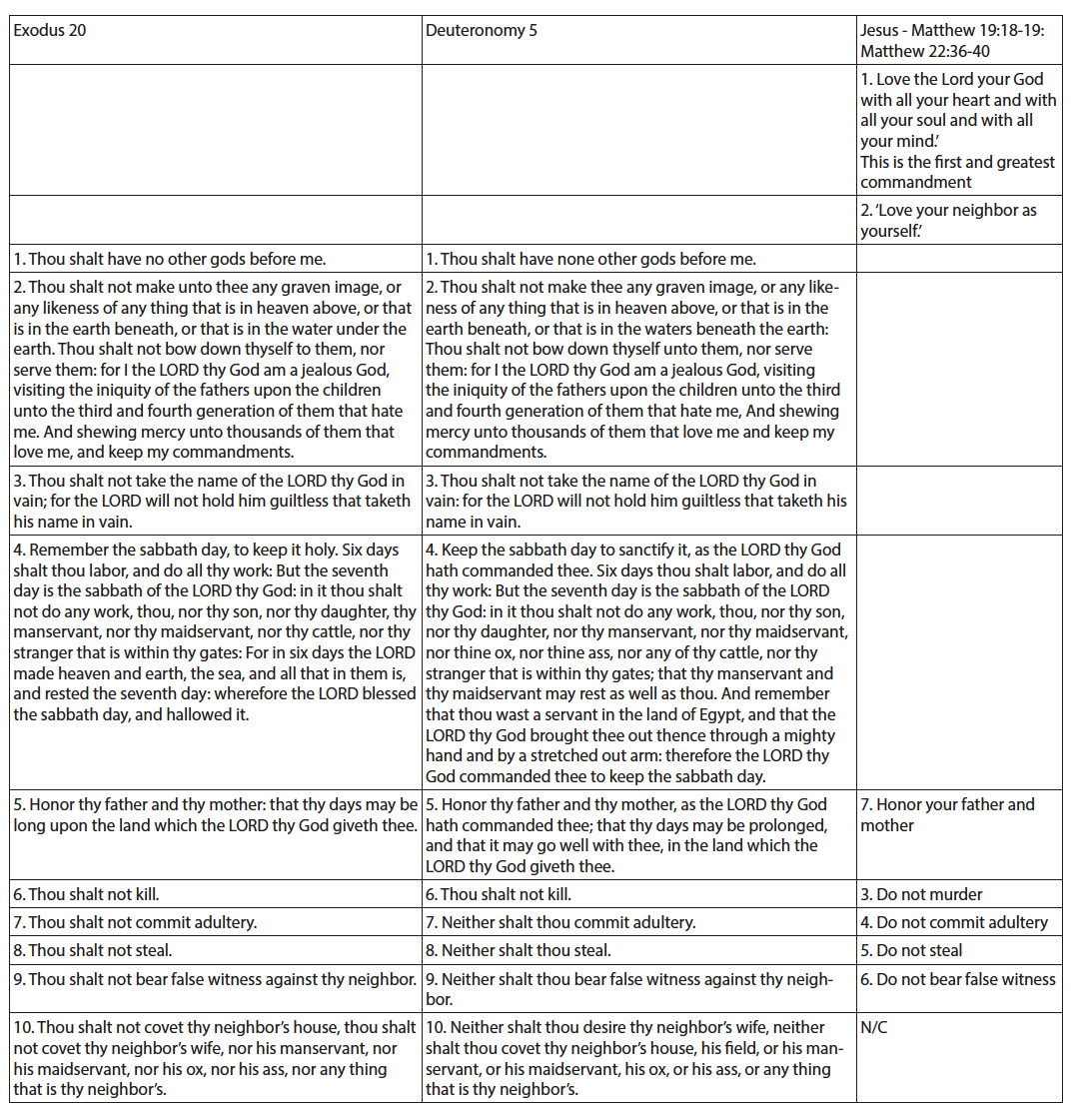
Jesus does not seem to care much about commandments 1 through 4, and 10. The logical computer-programmer person in me has always thought the first commandment in not monotheistic. It’ says you can’t have any gods ahead of the Lord, but doesn’t say you can’t have any secondary gods. One suspects this is more carelessness on the part of the scribes – it can’t be too easy carving stuff into stone.
But all in all it suggests that we can have all the paintings and statues of Jesus and God that we want. And we can keep Vince Lombardi as long as we remember he’s toward the back of the line.
When asked about the greatest commandment (Matthew 22:37–40), Jesus gives a powerful summary:
• Love God with all your heart, soul, and mind
• Love your neighbor as yourself
He says all the other commandments, which he listed in Matthew 19, hang on these two. In other words, every rule points away from cruelty and back to love and kindness.
Jesus goes on to criticize excessive legalisms: Jesus says in Mark 7:15, “Nothing outside a person can defile them by going into them. Rather, it is what comes out of a person that defiles them.” He then elaborates on the sorts of things that can come from within, out of a person’s heart, that evil thoughts come—sexual immorality, theft, murder, adultery, greed, malice, deceit, lewdness, envy, slander, arrogance and folly. All these evils come from inside and defile a person.”
Jesus does not list cruel words explicitly, but I suspect his reference to deceit and slander would apply to the cruel things we sometimes say.
Obedience isn’t about legalism—it’s about relationship with others. He teaches that the spirit of the law matters more than rigid rule-keeping. A simple way to understand it is that Jesus takes the commandments from:
• Arbitrary rules to follow to a life shaped by love
• External behavior to inner transformation
• Onerous obligation to a relationship with the world
Jesus doesn’t hand you a checklist—He gives you a mirror. The commandments are not just about what you do with your hands, but what lives in your heart. If you love God deeply, and love others genuinely, you won’t break the commandments—you’ll fulfill them. And in my experience, you will have a happier life each and every day – you will walk in the light, not the darkness.
But you should still wash your hands before eating, if possible.
Who Is My Neighbor?
A man once asked Jesus, “Who is my neighbor?”
It’s a question we still ask today—sometimes out loud, sometimes in how we live.
Jesus answered not with a definition, but with a story.
A man from Galilee’s was beaten, robbed, and left for dead on a road. He cried out for help, but two respected, religious men saw him and passed by. A squad of soldiers came by, and vowed to hunt down the robbers and smite them with the Lord’d Vengeance.
Then a man from Samaria came by. The victim was saddened, because Samaritans and Galileans don’t always get along. But the Samaritan stopped and bandaged the man’s wounds, then helped him to his feet. Together they managed to limp into the nearest village.
Jesus asked his questioner, Which one was the neighbor?
The answer is clear: the one who showed mercy.
The lesson is just as clear—and just as challenging.
Being a neighbor isn’t about proximity. It’s not about who is like us, agrees with us, or belongs to our group. It’s about how we respond when we see someone in need.
We live in a world full of reasons to pass by:
- “I’m too busy.”
- “Someone else will help.”
- “They don’t deserve it.”
But Jesus calls us to something higher.
He calls us to see people.
To stop even when it’s inconvenient. Maybe even especially then.
To help even when there might be some risk or danger.
To love without conditions.
Because real love isn’t theoretical—it’s practical. It shows up. It gets its hands dirty. It crosses boundaries.
So today, ask yourself:
Who is lying on the road in your life?
Who have you been walking past?
They may not be near by. They may be in Ukraine, or Sudan. Or they may be sleeping under a bridge just down the street from you.
And then hear Jesus’ final words in that story:
“Go and do likewise.” So, like, do it already!
The United States is NOT a Specifically-Christian Nation
Nor was it intended to be. Read on….
Roger Williams, a Puritan, believed the “garden of the church” should be separated “from the wilderness of the world” by means of a wall of separation. “Wilderness for them was a place of danger where evil lurked. So when Roger Williams talked about separating the garden of the church from the wilderness of the world, he was eager to maintain the integrity of the faith lest it be corrupted by too close an association with the state.”
In 1625 Charles I had little tolerance for those who wanted to purge the Church of England of all Roman Catholic elements, or, as they became known, Puritans. Charles empowered church authorities to persecute those who deviated from church policy. The year 1629 became one of decision for many Puritans. John Winthrop was given an opportunity to lead an organization called the Massachusetts Bay Company.
In early April 1630 Winthrop led a party bound for Salem, Massachusetts, followed by Roger and Mary Williams eight months later. Along with 20 other passengers on the vessel Lyon, they landed at Nantasket on February 5, 1631. Winthrop was glad to greet them. In his journal he referred to Williams as “a godly minister.”
Upon his arrival in Boston, Williams was offered the top pastorate in New England. To Winthrop’s surprise, Williams turned it down, because the church was still affiliated with the Church of England. Williams believed in a fully separated church, one untainted by compromise with the state religion of the king’s church.
Without hesitation Williams expounded on the idea that church and state should be separate. He questioned the right of the civil authorities to enforce religious edicts. Williams denied that the state could enforce religious commandments to love God, avoid blasphemy, or keep the Sabbath. These are matters of conscience, he believed, which the state must leave to the church.
This was too much for the Massachusetts authorities. Dissenting religious views were not tolerated. Winthrop sent a warning to Williams to flee the colony. Although he disagreed with Williams, Winthrop believed him to be a well-intentioned Puritan and did not want to see him die on a harsh winter voyage to England. Instead, in January 1636 Williams left Massachusetts. Abandoned by Puritans, he lived only by shelter of the Indigenous people. Williams lived with Native Americans of one tribe or another for 14 weeks until spring and settled in what is now Providence, Rhode Island. He was joined by his wife and children and faithful like-minded friends to settle Providence with land he purchased from the Narragansett tribe.
It was in Providence that the first government in the Americas was established with full religious freedom. The church and citizens’ religious opinions and commitments were completely separate from the civil government.
Their first governmental agreement, written and agreed to in 1638, was simple and relevant “only in civil things.” The agreement did not require any religious test or creed: “We , desirous to inhabit in the town of Providence, do promise to subject ourselves to all such orders or agreements as shall be made for public good of the body by the major assent of the present inhabitants, incorporated together into a town—fellowship, and such others whom they shall admit unto them, only in civil things.” The citizens of Providence committed themselves again to religious liberty in a more complex 1640 Agreement, affirming: “We agree, as formerly hath been the liberties of the town, so still, to hold forth, liberty of conscience.” 7 With this simple phrase, the colony at Rhode Island agreed to conduct civil business without regard to the religious views of the citizens.
When Claiborne Pell, senator from Rhode Island, dedicated a national park in honor of Williams in Providence on October 8, 1984, he said that in 1636, 13 families came together to create “the first genuine democracy—also the first church-divorced and conscience-free community in modern history.” What an incredible story! Surely it’s one that should be told alongside the story of the Puritans coming to a new land to seek religious freedom for themselves.

