Blog Archives
Been a Little Busy Lately
Because, short term, we need to win in November or descend into fascism. But this is not a political blog so I will leave it at that.
Instead, I’ll recommend some othe reading: Andrew Spring writes:
From the very first words to the very last verse, the writings of the Bible document the best and worst of human action and belief. It is a work of literature that can do tremendous harm—but also tremendous good.
This uncomfortable fact is usually lost on those of us who left the religion about Jesus—Christianity—in search of the religion of Jesus. (The former is the invention of rich men trying to control humanity, the latter is the radical and world-changing spirituality and ethical living preached by an ancient prophet.)
The bible is not one book – it’s a library. The Bible is a collection of writings, and the word comes from the Greek biblia, which means “the books,” plural. It’s sort of like saying The Library.
It would be like asking what your favorite Beatles song is and saying Abbey Road. Clearly you don’t know what you’re talking about, because Abbey Road is not one song, but a collection of songs—just as the Bible is not one writing but a collection of writings.
But unlike Abbey Road, each of the writings of the Bible have different authors. (I double checked: almost all the songs on Abbey Road were written by both Lennon and McCartney, except three that were written by George or Ringo.²) And each writing was done in a different location, with different audiences and—wait for it—different purposes.
Perhaps some Christians refuse to acknowledge this, because if the Bible is a collection of writings, that means somebody had to put them together.Looked at through this lens, the Bible becomes much more human—and much more prone to error.
Google Andrew Spring to read more. He can be controversial but that’s good, it makes you think.
There is also a substack post called “She’s So Scripture”
Sin, Onan, & Other Mysteries
/Many years ago I was traveling on business, and at the end of the day, called home to my wife to tell her how my day went. I’d visited a company that made generators, called Onan.
There was a long pause. She finally asked, “Don’t they know what that means? The sin of Onanism?” This brought a smile to my face, as I had not considered this interpretation. I hope the Sin of Onanism is not really a sin, since it is so frequently done by men and women all over the world. 😉
This leads one to wonder, what actions could really be consider sinful? And why do people commit things usually thought of as sinful? Let’s start with the Ten Commandments, after all, and compare them with what Jesus said.
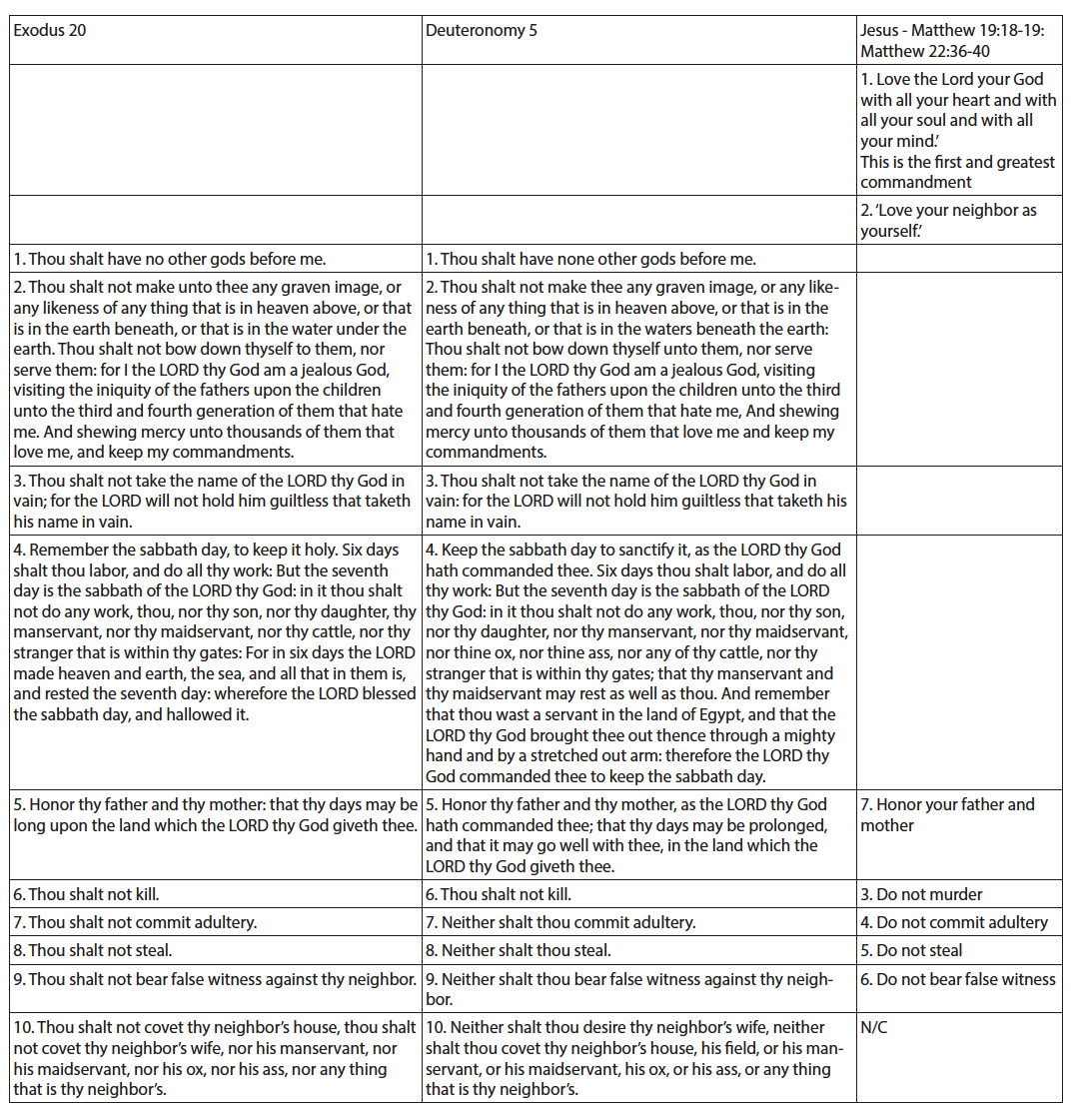
Jesus does not seem to care much about commandments 1 through 4, and 10. The logical computer-programmer person in me has always thought the first commandment in not monotheistic. It’ says you can’t have any gods ahead of the Lord, but doesn’t say you can’t have any secondary gods. One suspects this is more carelessness on the part of the scribes – it can’t be too easy carving stuff into stone.
But all in all it suggests that we can have all the paintings and statues of Jesus and God that we want. And we can keep Vince Lombardi as long as we remember he’s toward the back of the line.
When asked about the greatest commandment (Matthew 22:37–40), Jesus gives a powerful summary:
• Love God with all your heart, soul, and mind
• Love your neighbor as yourself
He says all the other commandments, which he listed in Matthew 19, hang on these two. In other words, every rule points away from cruelty and back to love and kindness.
Jesus goes on to criticize excessive legalisms: Jesus says in Mark 7:15, “Nothing outside a person can defile them by going into them. Rather, it is what comes out of a person that defiles them.” He then elaborates on the sorts of things that can come from within, out of a person’s heart, that evil thoughts come—sexual immorality, theft, murder, adultery, greed, malice, deceit, lewdness, envy, slander, arrogance and folly. All these evils come from inside and defile a person.”
Jesus does not list cruel words explicitly, but I suspect his reference to deceit and slander would apply to the cruel things we sometimes say.
Obedience isn’t about legalism—it’s about relationship with others. He teaches that the spirit of the law matters more than rigid rule-keeping. A simple way to understand it is that Jesus takes the commandments from:
• Arbitrary rules to follow to a life shaped by love
• External behavior to inner transformation
• Onerous obligation to a relationship with the world
Jesus doesn’t hand you a checklist—He gives you a mirror. The commandments are not just about what you do with your hands, but what lives in your heart. If you love God deeply, and love others genuinely, you won’t break the commandments—you’ll fulfill them. And in my experience, you will have a happier life each and every day – you will walk in the light, not the darkness.
But you should still wash your hands before eating, if possible.
Jesus & Helping the Poor
In Matthew 40 there is the story of the sheep and the goats. It goes something like this:
Jesus separated the people one from another as a shepherd separates the sheep from the goats. He put the sheep on his right and the goats on his left. He said to those on his right, “Come; take your inheritance, the kingdom prepared for you since the creation of the world!
For I was hungry and you gave me something to eat, I was thirsty and you gave me something to drink. I was a stranger and you invited me in. I needed clothes and you clothed me, I was sick and you looked after me. I was in prison and you came to visit me.”
Those on his right asked, “Jesus, when did we see you hungry and feed you, or thirsty and give you something to drink? When did we see you a stranger and invite you in, or needing clothes and clothe you? When did we see you sick or in prison and go to visit you?”
Jesus replied, “Whatever you have done for one of the least of these brothers and sisters of mine, you did for me.”
Then he will say to those on his left, “Depart from me to the eternal fire prepared for you. When I was hungry you gave me nothing to eat. I was thirsty but you gave me nothing to drink. I was a stranger and you did not invite me in. I needed clothes but you did not clothe me. I was sick and in prison and you did not look after me.”
This on his left asked, “Jesus, when did we see you hungry or thirsty or a stranger or needing clothes or sick or in prison, and did not help you?”
Jesus replied, “Whatever you have not do for one of the least of these, you did not do for me.”
So what can we learn from this?
Well, it is pretty obvious that Jesus wants us to help the less fortunate, the “sad accidents of Fortune’s careless aim.” (I’ve always liked that phrase…. such folks are out there, usually through no fault of their own.)
Christmas can be a high-stress time for people – it can get expensive; there are many – perhaps too many – social obligations. The days are short; the nights longs and dark. It’s a good time to give money to a local charity – and maybe even directly to someone who needs it. They will feel better. I’d guess you will too.
 Wednesday Night Church of Jesus